


Understanding Common Bank Fees
Understanding how bank fees, minimum balance requirements, and interest work can help you choose the right account and avoid unnecessary costs. Fees vary by account and may include charges for services like monthly maintenance, ATM use, or overdrafts, while minimum balances may help you avoid certain fees.

Common Bank Fees Explained
Choosing the right bank account involves more than comparing interest rates or convenience. It’s also about understanding the fees that can come with everyday banking. Monthly service charges and minimum balance requirements can significantly impact the true cost of an account. When you know how these fees work and how to avoid them, you can make smarter, more informed banking decisions.
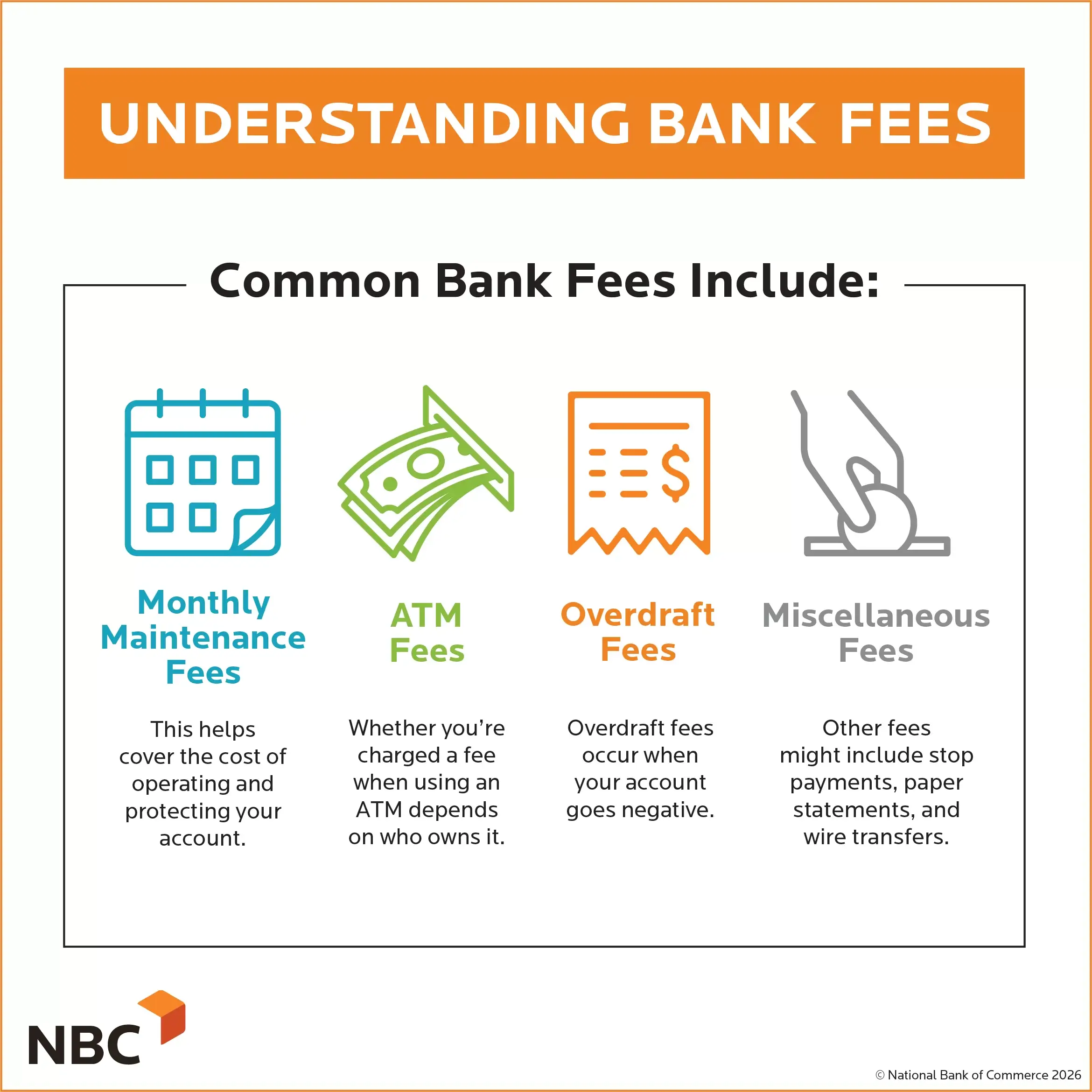
Monthly Maintenance Fees
Monthly maintenance fees help cover the cost of operating and protecting your account, including secure systems, account monitoring, customer support, and digital banking tools. These fees allow us to provide consistent service, safety, and convenience to our valued customers.
ATM Fees
Another common charge to understand is ATM fees. ATMs are everywhere, making it easy to access your money when and where you need it. Some ATMs charge you and some don’t. So, what’s the difference? In-network ATMs are owned by your bank or a partner bank and generally don’t charge a fee. For example, every National Bank of Commerce (NBC) branch has fee-free ATMs. We also partner with MoneyPass, which is a surcharge-free network with over 40,000 ATMs nationwide. Out-of-network ATMs are owned by other financial institutions or independent operators and often include a surcharge set by the ATM owner. You’ll always see any applicable fee disclosed before you complete your transaction.
Overdraft and Miscellaneous Fees
When an account goes negative, the bank is essentially covering the transaction for you until the funds are added back into your account. This creates additional risk and processing, which is why an overdraft fee may occur. There are also other miscellaneous fees to be aware of, such as stop payments, paper statements, and wire transfers. These services require more time and attention to detail, manual processing, or third-party involvement. Those miscellaneous fees help cover the extra costs, so we can continue to provide those services when you need them.
What is a Minimum Balance Requirement?
Every account, even one that isn’t used often, still costs the bank money to maintain and protect. That’s where minimum balance requirements come in. Keeping a set balance helps cover those costs without the need for higher or additional monthly fees. In many cases, the minimum balance works like a fee waiver. If you keep the required balance in your account, the bank usually won’t charge a monthly maintenance fee. If your balance drops below that amount during a statement cycle, a monthly service charge may be applied.
Do Checking and Savings Accounts Earn Interest?
Checking accounts differ from savings accounts in many ways, but one of the biggest differences is how they earn interest. Checking accounts are designed for everyday spending, not saving. With a checking account, money is constantly moving in and out, and banks typically don’t pay interest on them. This is often because fee-free checking accounts give you convenience without monthly charges, so the bank offsets the cost of providing that service by not paying interest. Additionally, the expenses involved in maintaining and securing the account can be higher than what the bank would pay in interest, making it impractical to offer interest on these accounts.
Savings accounts, on the other hand, are designed to help your money grow. Banks pay interest on the money you keep in a savings account, and the longer and more you save, the more you earn. You may hear the term APY, or Annual Percentage Yield, when talking about interest. APY shows the actual return you’ll earn on your money over a year, including the effect of compounding, when the interest your account earns starts earning interest itself. This interest on interest helps your savings grow faster over time.
How Can You Reduce or Avoid Bank Fees?
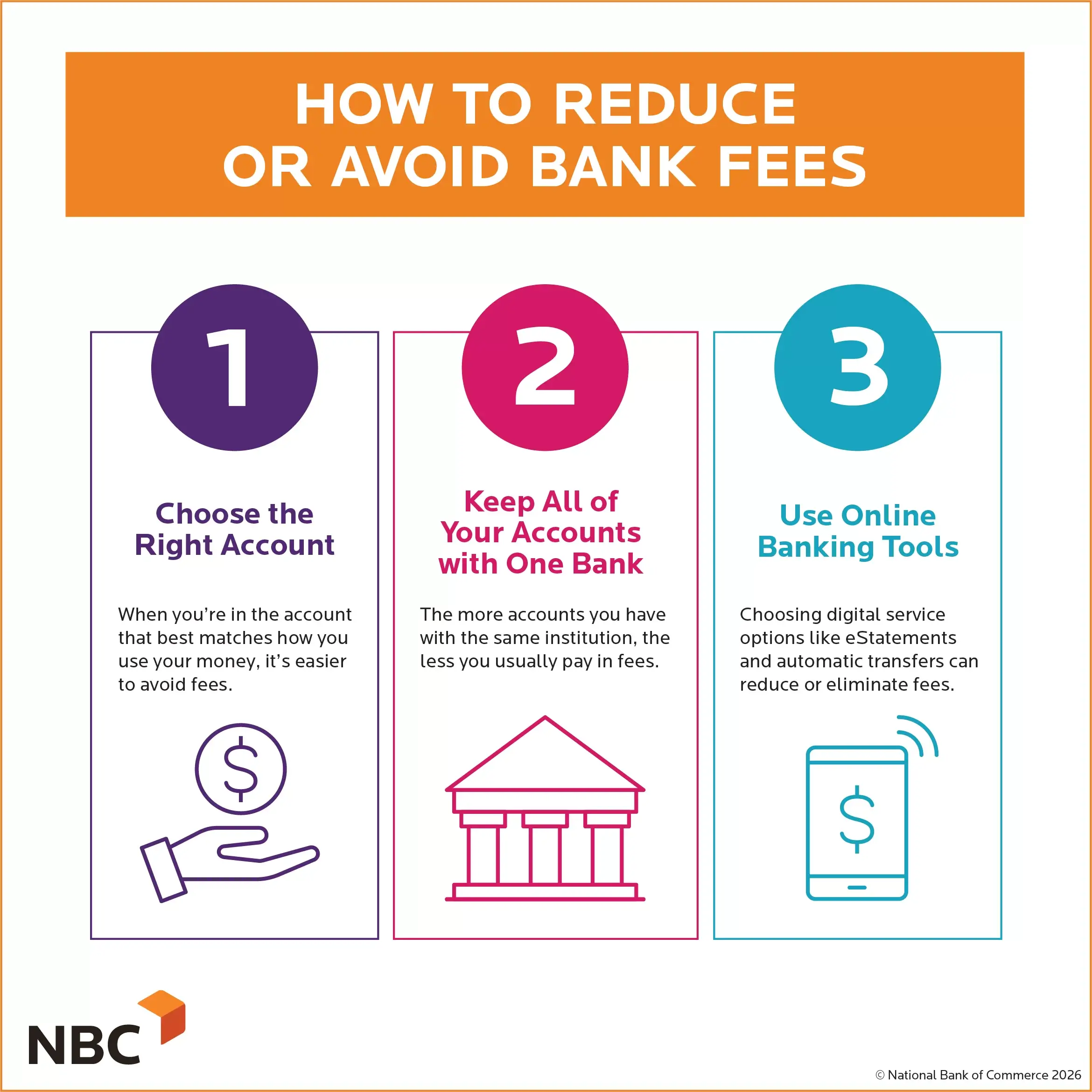
One way of reducing or avoiding fees is by choosing the right account. Different accounts are designed for different needs, so when you’re in the account that best matches how you use your money, it’s easier to avoid fees. Another way to lower fees is by keeping all your accounts with one bank. When the bank can see your full relationship rather than just one account, it’s easier to waive fees. The more your accounts work together, the less you usually pay in fees. There are also many digital options to help with avoiding fees. Those options include going paperless, setting up alerts for balances and/or transactions, scheduling automatic transfers, and using digital payments instead of cash or checks. All these tools are located within your online banking, and you have ability to adjust them as needed.
FAQs
Monthly maintenance fees help cover the cost of operating and protecting the account.
Yes, they are if you use an in-network ATM. If you’re unsure where the nearest in-network ATM is, you can use an online ATM locator. NBC partners with MoneyPass, and you can find the closest ATM using the MoneyPass ATM locator.
An interest-bearing checking account is a great option for those who maintain a consistently higher balance, meet the account’s activity requirements, and want easier access to their money than a savings account or certificate of deposit.
Conclusion
Bank fees and minimum balance requirements can quietly impact your finances, but understanding your account can help you avoid unnecessary charges and make informed decisions. If you’d like to sit down with a banker to review your finances and talk through your options, schedule an appointment.