


How to Switch Banks Without the Headache
Switching banks can feel daunting, but it doesn’t have to be. Whether you’re looking for better interest rates, lower fees, or a more user-friendly digital experience, moving your accounts is a straightforward process when you have a plan in place. You can open a new account in a single visit. The full transition usually takes three to six weeks as deposits and automatic payments shift to your new financial institution.
This step‑by‑step guide walks you through the signs that it might be time to move on and how to make the switch as seamless as possible.
Signs It Might Be Time to Switch Banks
Not sure if you should stay or go? If you are experiencing any of the following, it may be time to start shopping for a new financial home:
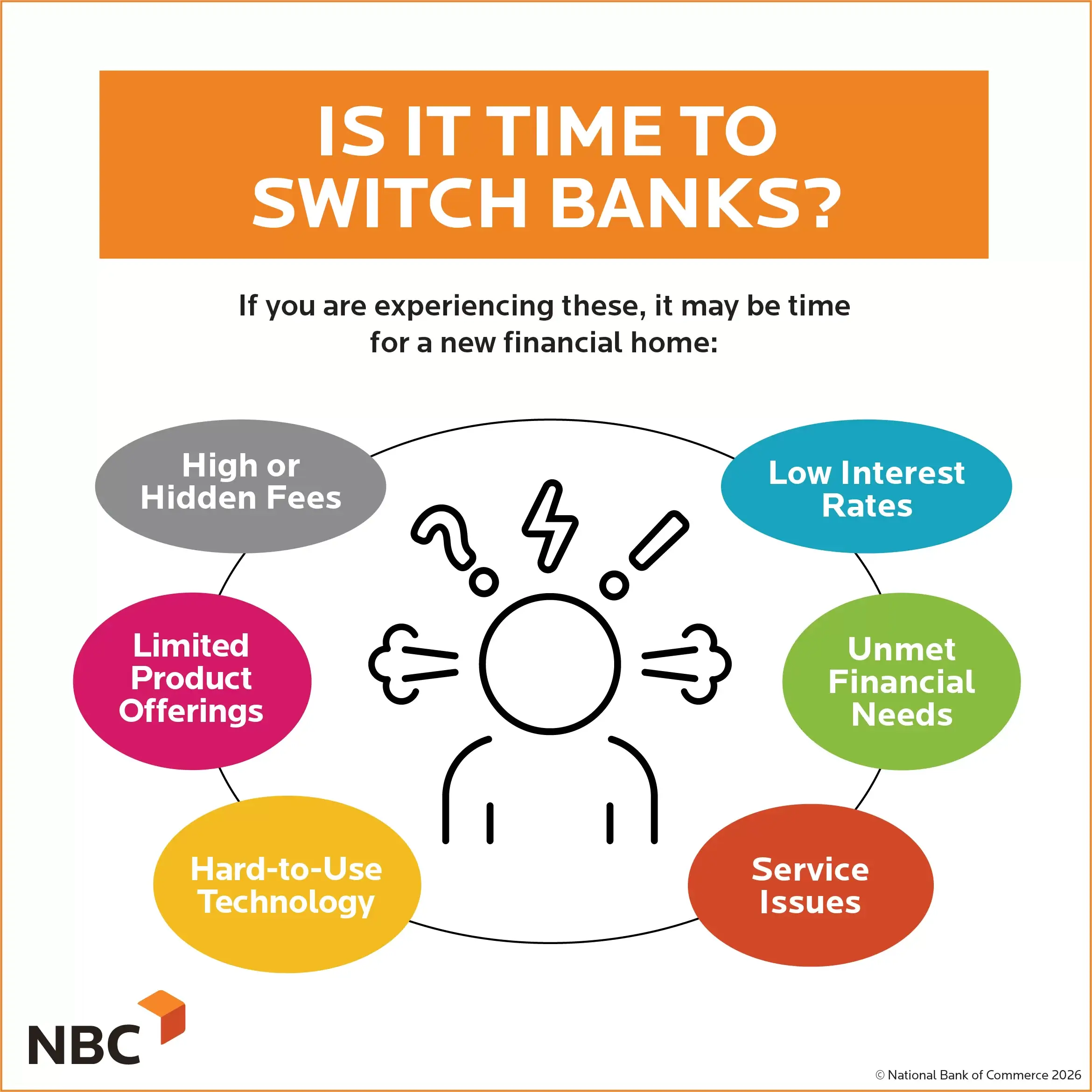
High or Hidden Fees
Monthly maintenance fees, ATM fees, and overdraft charges can add up quickly. If you feel like you are paying more in fees than you should, it may be time to explore other options. Our SimpleChoice and Choice50 checking accounts have no monthly maintenance fee, which helps you keep more of your money working for you.
Low Interest Rates
Your money should grow, not sit still. If your current bank is offering low rates on CDs, money market accounts, savings accounts, or interest-earning checking, you may be missing out on better opportunities. Even a small difference in rates can make a meaningful impact on your long-term savings goals.
Service Issues
If it’s difficult to reach a real person when you need help, or if your branch hours don’t fit your schedule, that may be a sign that your bank isn’t supporting you the way it should. Good service should make you feel known and valued. If you are not receiving personal attention or timely support, it may be time to look for a bank that puts relationships first.
Convenience and Technology Limitations
Everyday banking should be simple. A strong mobile app, remote check deposit, bill pay, and person-to-person payment options make managing your money easier. If your current bank makes basic tasks feel complicated or outdated, you deserve a smoother experience.
Life Changes
Major life events often bring new financial needs. Moving to a new community, joining or separating households, starting a business, or preparing for retirement can all shift what you need from a bank. When life changes, it’s worth checking to make sure your accounts and services still support your goals.
Product Offerings
A strong financial partner should offer more than the basics. Look for a one-stop shop with loans, health savings accounts, mortgage options, wealth management, and business accounts. Most importantly, look for a banker who understands your long-term goals and can guide you beyond day-to-day transactions.
What Should You Do Before You Switch Banks?
Preparation is the secret to a stress-free transition. Before closing your old account, take these steps:
- Enroll in Online and Mobile Banking: Set up online banking, download the mobile app, and add your new debit card to your digital wallet.
- List Your Automatic Payments: Review the last three months of statements and highlight recurring charges such as streaming services, utilities, insurance, and memberships. Note any outstanding checks that still need to clear.
- Identify Your Deposits: Make a list of anyone who sends you money automatically, including your employer, Social Security, or the IRS.
- Open the New Account First: Never close your old account until the new one is fully active.
How to Switch Banks: Step by Step
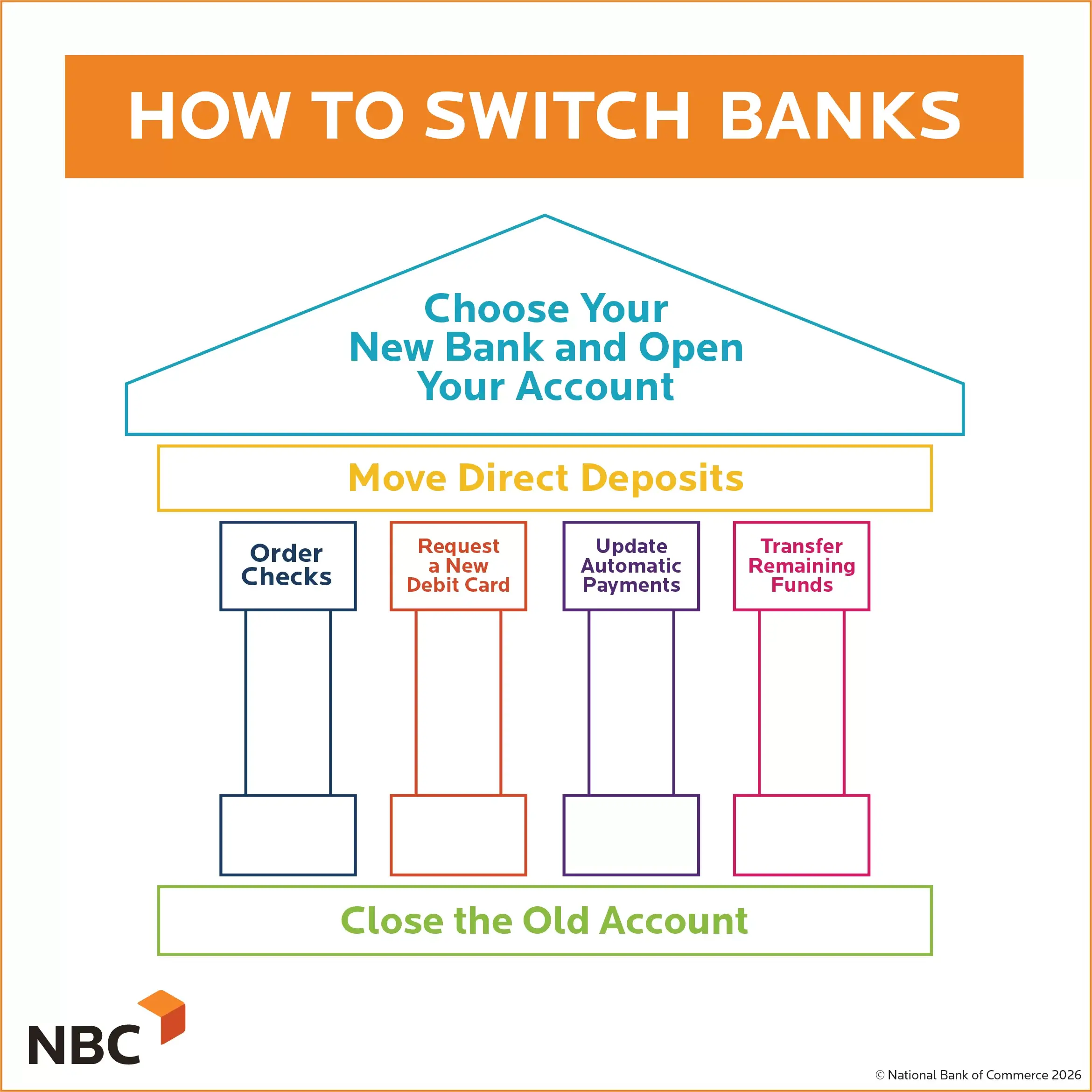
Follow these steps to ensure nothing falls through the cracks:
- Close the Old Account: Do not leave the account sitting at a zero balance. Formally close it with your old bank to avoid dormant account fees or accidental overdrafts from any forgotten payments. If you plan to keep the account open for a short time during the transition, ask whether a minimum balance is required to avoid unnecessary fees.
- Choose Your New Bank and Open Your Account: Meet with a banker who can walk you through your options, explain the differences, and recommend the account that fits your needs. During that conversation, you can also review any fees or minimum balance requirements. Once you decide together, you can open the new account and make your initial deposit.
- Request a Debit Card: Many locations offer same-day debit cards and can help you add your new card to the mobile wallet on your phone.
- Order Checks: Decide whether you want single checks or duplicate checks. Duplicate checks include a copy of each check for your records. Checks usually take seven to ten days to arrive.
- Move Direct Deposits: Provide your new routing and account numbers to your employer or payroll provider so they can update your direct deposit information. Some employers make the change right away, while others process updates on a set schedule, so it may take one or two pay cycles before your paycheck begins depositing into your new account. Keeping both accounts open during this time helps ensure nothing is missed.
- Update Automatic Payments: Log into each service provider and update your payment method to your new debit card or account number. This includes streaming services, utilities, insurance, phone bills, memberships, and any other recurring charges you have set up. Some companies update your information right away, while others may take a full billing cycle to process the change. Keeping an eye on both accounts during this time helps ensure nothing is missed.
- Transfer Remaining Funds: Wait until all payments and purchases have fully processed in your old account and your paycheck or other deposits are showing up in your new account. Once you are sure nothing is still moving through the old account, you can transfer the remaining balance to your new one.
Common Mistakes to Avoid
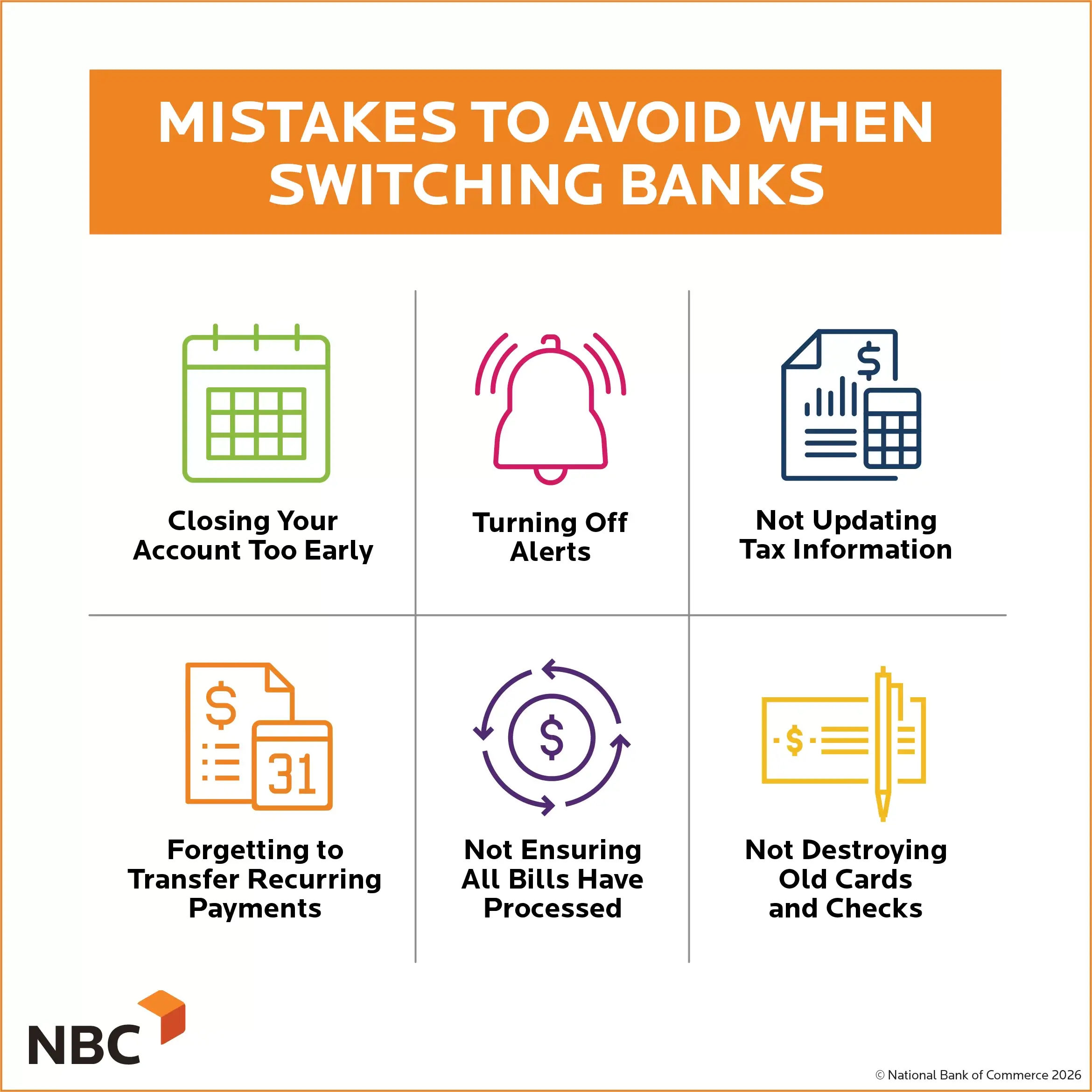
- Closing Too Early: Keep a small buffer in your old account for at least a month.
- Not Destroying Old Materials: Bring old debit cards and checks to your new bank for secure destruction.
- Skipping Alerts: Leave online banking active and set up low balance alerts so nothing surprises you.
- Forgetting Annual Subscriptions: Review your yearly history for charges such as Amazon Prime or software renewals.
- Not Updating Tax Information: Let your tax preparer know your new routing and account numbers.
- Overdraft Timing: A bill that processes after you move your funds can trigger fees.
WATCH OUR VIDEO
Also Available On


FAQs
Opening a new account takes only a few minutes. The full transition usually takes three to six weeks to make sure all deposits and automatic payments have moved over.
Opening or closing a checking or savings account doesn’t affect your credit score. Applying for an overdraft line of credit may result in a temporary hard inquiry.
Yes. Keeping both accounts open during the transition is the safest way to avoid missed payments.
Conclusion
Switching banks doesn’t have to be complicated. With a little preparation and the right support, you can move your accounts, update your payments, and make the transition with confidence. If you’re considering a change, an NBC banker can help you compare your options, answer your questions, and make the switch as seamless as possible. Schedule an appointment to get started.