


Do I Need a Separate Business Bank Account?
Yes. Opening a separate business bank account helps keep personal and business finances organized, simplifies recordkeeping, and creates a stronger financial foundation for your business. While requirements vary depending on your business structure, a dedicated account can make it easier to manage expenses, prepare for tax time, and track your business activity.

At National Bank of Commerce (NBC), we work closely with local business owners every day, from first-time entrepreneurs to multigenerational family businesses. One of the most common questions we hear early on is, “Do I really need a separate business bank account?”
Opening a business account early is often one of the smartest money moves you can make. It helps keep your finances separate, makes day-to-day management easier, and gives your bank a clearer picture of how to support your business.
Why Should You Keep Business and Personal Accounts Separate?
Keeping business and personal finances separate makes it easier to stay organized, track what you’re earning and spending, and prepare for tax time. A dedicated business account keeps records cleaner and gives you or your accountant a clearer view of business income and expenses.
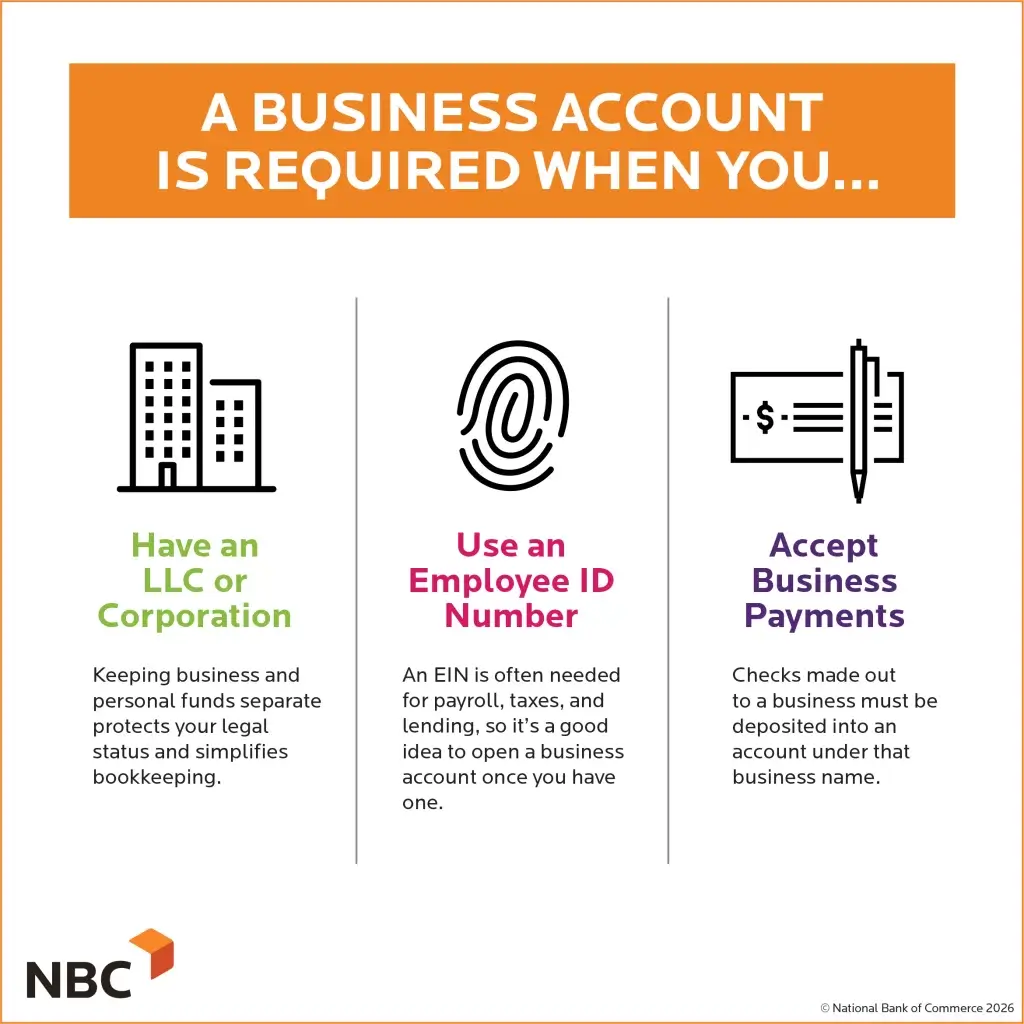
For LLCs and corporations, separation is especially important. Mixing personal and business funds can weaken the legal separation between you and your business, create messy records, and make it harder to show that the business is operating on its own.
Many businesses also use an Employer Identification Number, or EIN, for tax reporting, payroll, and opening a business account, which can help protect personal information. Because requirements can vary, it’s a good idea to talk with your attorney or tax professional about what applies to your business.
Bank policies matter too. Checks made out to a business must be deposited into an account with that business name. Putting business checks into a personal account goes against policy and can create tax and record issues.
Risks of Using a Personal Account for Business
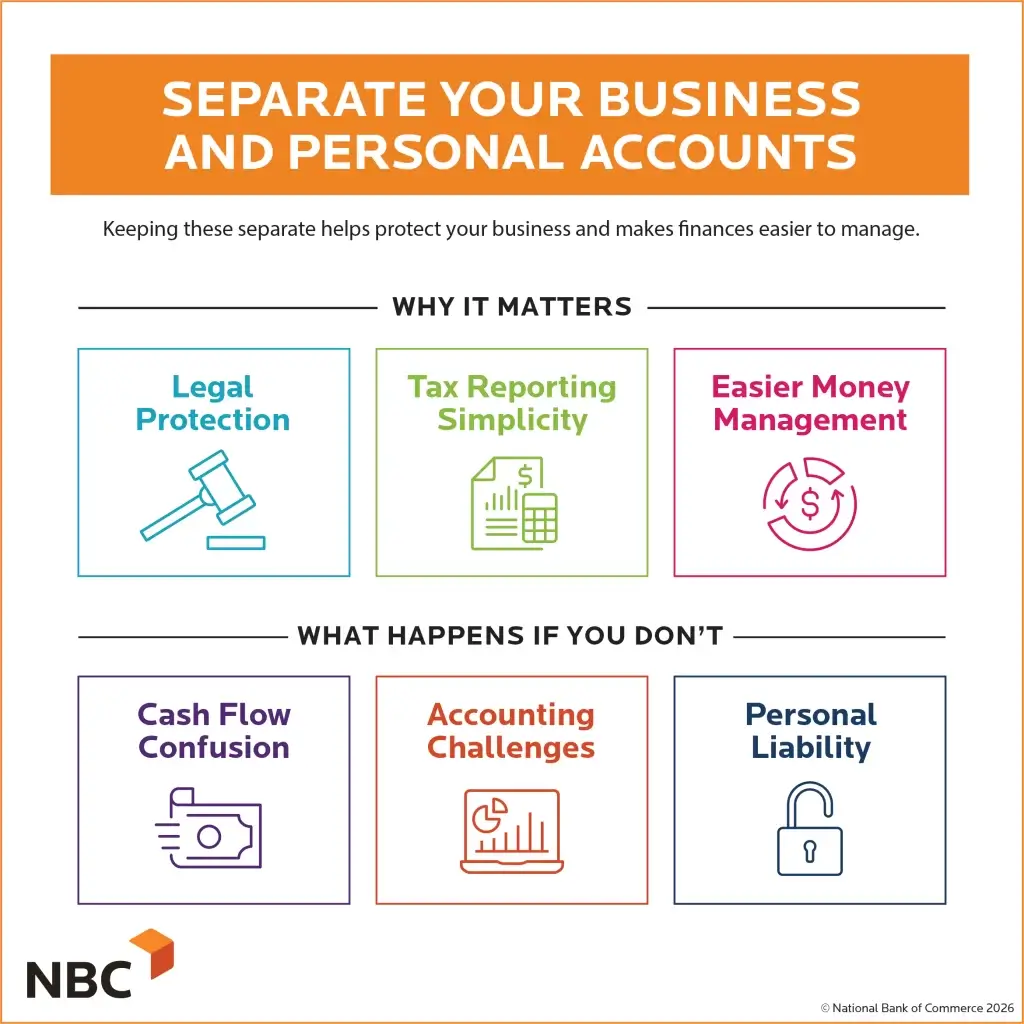
Using a personal account for business may seem convenient at first, but it can create problems as your business grows. When transactions are mixed, it becomes harder to see how money is moving through the business, understand how things are going, and keep accurate records.
Mixed records can also make bookkeeping more time consuming and expensive. Separate accounts help reduce stress at year end and make reporting easier.
There can also be legal concerns. A dedicated business account helps keep personal and business finances separate, which can help protect your personal finances if questions arise.
What Are the Benefits of a Business Checking Account at a Community Bank?
A business checking account at a community bank does more than keep your finances organized. It helps you build a relationship with people who understand your business, your community, and your goals. When all of your transactions flow through one account, your banker can better understand your cash flow and help identify solutions that fit your needs.
This becomes especially valuable when it’s time to apply for a loan or line of credit. A local banker who knows your business and has a clear picture of your financial activity can have more meaningful conversations with you about your options.
Choosing a community bank also keeps more of your money working close to home. Deposits at community banks help support local lending, local jobs, and local growth. At NBC, we’re proud to invest back into the communities we serve through donations, sponsorships, and volunteer efforts.
FAQs
In many cases, yes, but it’s still not recommended. Even for sole proprietors, a business account simplifies taxes, improves organization, and helps your bank better serve you.
If a personal account is used mainly for business activity, banks may require it to be moved to a business account to comply with policy.
Requirements can vary by state and situation, but keeping a separate account is an important step in keeping personal and business finances separate, keeping records clean, and meeting common banking and tax expectations.
Conclusion
Opening a separate business account is one of the simplest ways to keep your money organized, separate personal and business finances, and build a stronger foundation for your business. It can also make tax time easier and give you a clearer picture of your business finances. If you’d like to sit down with a banker to explore your options, schedule an appointment.